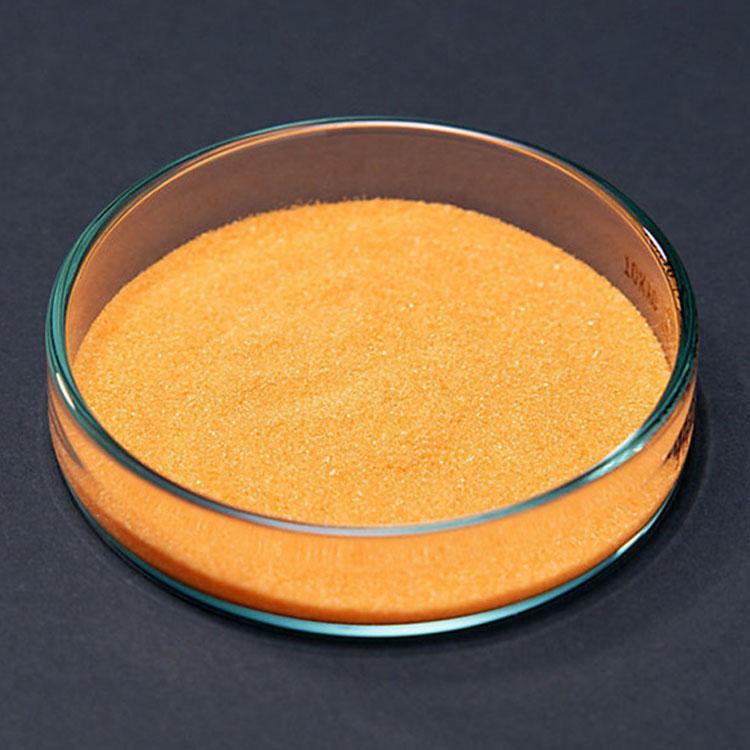
Chemical Name: Gold(III) chloride trihydrate
CAS 16961-25-4
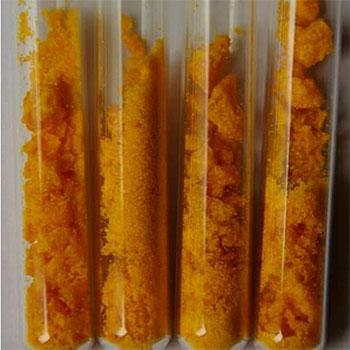
Appearance: Golden yellow or yellow red crystal
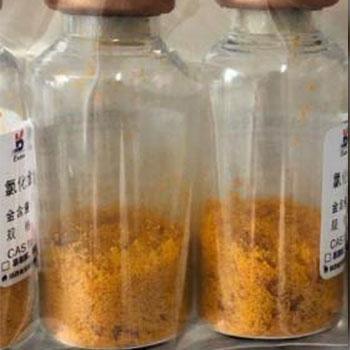
Packing: 1g/10g/50g Glass bottle
Assay: 99.9%
Sample: Available

Chemical Name: Gold(III) chloride trihydrate
CAS 16961-25-4
Appearance: Golden yellow or yellow red crystal
Packing: 1g/10g/50g Glass bottle
Assay: 99.9%
Sample: Available
Gold (III) chloride trihydrate Details
Chemical Name: Gold(III) chloride trihydrate
Other Name: Hydrogen tetrachloroaurate(III) trihydrate; Tetrachloroauric (Ⅲ) Acid Trihydrate; Gold trichloride trihydrate
CAS No.: 16961-25-4
Molecular Formula: AuCl4H7O3
Molecular weight: 393.83
Appearance: Golden yellow or yellow red crystal
Assay: 50% Au content
Typical Properties
| Items | Specifications |
| Au content | 50% |
| Purity |
99.9% |
| Appearance | Golden yellow or yellow red crystal |
| Stability |
Soluble in water, ethanol, etc., decomposed by heat, easily deliquesced by air |
| Melting point |
30℃ |
| Density |
3.9 g/cm3 |
Gold (III) chloride trihydrate Usage
Nanotechnology & Nanomedicine
Gold Nanoparticle Synthesis: Primary precursor material for synthesized spherical, rod, and star gold nanoparticles (AuNPs) used in bio-imaging, lateral flow diagnostic test strips, and targeted drug delivery.
Electroplating & Surface Treatment
Precious Metal Plating Solutions: Used in the preparation of specialized electroplating and electroless gold plating baths for microelectronics, printed circuit boards (PCBs), and luxury jewelry manufacturing.
Chemical Catalysis & Organic Synthesis
Homogeneous Lewis Acid Catalyst: Serves as an efficient Lewis acid catalyst for carbon-carbon bond formation, alkynes activation, and selective oxidation reactions in fine chemical synthesis.
Glass & Ceramics Staining
Purple of Cassius & Ruby Glass: Used to produce “Purple of Cassius” pigment for high-end ruby red glass, porcelain enamel decoration, and stained glass art.
Packaging and Shipping
Packing: 1g/10g/50g Glass bottle
Gold (III) chloride trihydrate Storage
Keep container tightly sealed in a cool, dry, dark, and well-ventilated dedicated hazardous store.
Protect strictly from humidity, direct sunlight, heat, organic vapors, and contact with reducing agents or active metals.