Product Name: Dipropyl Tetrasulphide
CAS : 52687-98-6
Formula: C6H14S4
Molecular Weight:214.44
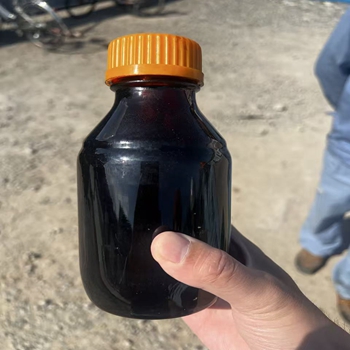
Appearance: Dark brown liquid

Product Name: Dipropyl Tetrasulphide
CAS : 52687-98-6
Formula: C6H14S4
Molecular Weight:214.44
Appearance: Dark brown liquid
Dipropyl Tetrasulphide Details
Product Name: Dipropyl Tetrasulphide
Other Name: Dipropyl Pertetrasulfide; Eco – friendly vulcanize(FSA-65); Di-n-propyl tetrasulfide; Propyl tetrasulfide; 1,4-di(n-propyl)tetrasulfane
CAS : 52687-98-6
Formula: C6H14S4
Molecular Weight:214.44
Appearance: Dark brown liquid
Dipropyl Tetrasulphide Technical Specifications:
| Physical Property | Specification |
| Sulfur Content, % | 58–62% |
| Flash Point (open cup), °C | < 90 |
| Odor | Low odor |
| Kinematic Viscosity, mm²/s (at 40°C) | 5–40 |
| Appearance | Dark brown liquid |
Dipropyl Tetrasulphide Application
Eco – friendly vulcanize(FSA-65)
The environment-friendly vulcanizer has the characteristics of high flash point (more 100°C), low odor and low initial decomposition temperature, and can replace dimethyl disulfide (DMDS). It is widely used in the wet sulfidation of hydrogenation catalysts and the wet sulfur replenishment process during hydrogenation in the refining, chemical and coal chemical industries, showing more safe and environmentally friendly.
Applications:
| Item | Dimethyl Disulfide (DMDS) | New Generation Safe & Environmentally Friendly Sulfiding Agent (FSA-65) |
| Component Composition | Dimethyl Disulfide | Ddipropyl tetrasulphide |
| Safety | Listed as a key controlled hazardous chemical in the National Catalogue of Hazardous Chemicals. Flash point: 16°C, flammable and explosive, high risk in safe operation. | Not listed in the National Catalogue of Hazardous Chemicals. Flash point >90°C, non-flammable and non-explosive liquid, low risk in safe operation. |
| Environmental Friendliness | Volatile, with a strong foul odor. Causes significant harm to the environment and personnel. | Non-volatile, no foul odor. Good operating environment. |
| Main Decomposition Temperature Range | 190~210°C | 150~230°C |
| Decomposition Products Under Hydrogen | Methane, which appears as a gas phase in the reaction system. | Propane, which appears as a liquid phase in the reaction system. |
| Impact on Cyclic Hydrogen Concentration During Sulfiding | Significantly reduces hydrogen purity, requiring intermittent venting and replenishment of fresh hydrogen. | For some units, no venting of tail gas or replenishment of fresh hydrogen is needed, significantly reducing hydrogen consumption. |
| Issue of Excess Sulfur Content in Fuel Gas or Flare During Start-up Sulfiding | Many refineries experience excess sulfur in flares due to the use of DMDS. | Since FSA-65 is injected at a low temperature and does not gasify, this issue can be resolved. |
| Temperature Rise of Sulfided Bed | 5~20°C | 2~5°C |
| Comprehensive Energy Consumption for Sulfiding | Normal level | Reduced year-on-year |
| Sulfiding Effect | Fully meets requirements | Fully meets requirements |
| Overall Cost Performance | Low | High |
Dipropyl Tetrasulphide Storage:
Stored in a cool dry place out of direct sunlight.
Dipropyl Tetrasulphide Package
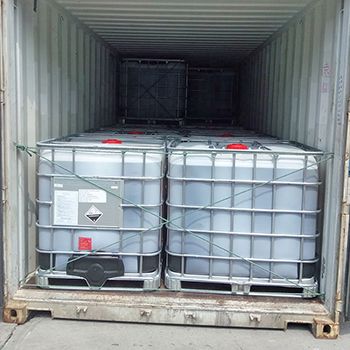
1000kg/IBC drum,20mt/ISO Tank