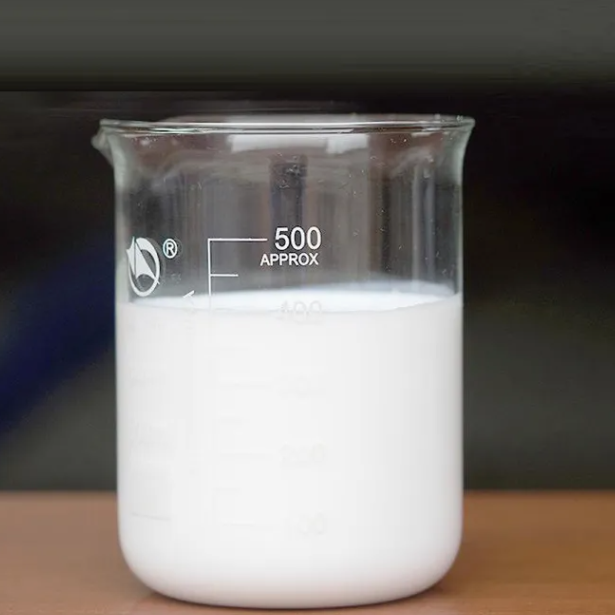
Chemical Name: Carboxylated Styrene Butadiene Rubber Latex
CAS No.: 25085-39-6
Appearance: White emulsion, no visible coagulum and impurities
Assay: 48.0% – 50.0% (Solid Content)
Standard Packaging: 1000L IBC tanks

Chemical Name: Carboxylated Styrene Butadiene Rubber Latex
CAS No.: 25085-39-6
Appearance: White emulsion, no visible coagulum and impurities
Assay: 48.0% – 50.0% (Solid Content)
Standard Packaging: 1000L IBC tanks
Chemical Name: Carboxylated Styrene Butadiene Rubber Latex
Synonyms: XSBRL; Carboxylated SBR Latex; 1,3-Butadiene polymer with ethenylbenzene and 2-propenoic acid
CAS No.: 25085-39-6
EC No.: 607-536-1
Molecular Formula: (C8H8.C4H6.C3H4O2)x
Molecular Weight: Variable (High Polymer)
Appearance: White emulsion, no visible coagulum and impurities
Assay: 48.0% – 50.0% (Solid Content)
| Item | Specifications |
| Appearance | White emulsion, no visible coagulum and impurities |
| Solid Content (wt%) | 48.0 – 50.0 |
| Apparent Viscosity (mPa s) | 300 max |
| pH Value | 6.5 – 8.5 |
Construction Materials: Extensively used as a modifier for cement and concrete to improve flexural strength, adhesion, and water resistance.
Paper Industry: Applied in paper coating to enhance surface strength, gloss, and printability of coated paper and paperboard.
Carpet Backing: Acts as a high-performance adhesive for carpet backing, providing excellent tuft lock and dimensional stability.
Textile Processing: Used in the textile industry for fabric dipping and finishing to improve hand-feel and durability.
Adhesives and Coatings: Serves as a base binder for various water-based coatings and pressure-sensitive adhesives due to its strong film-forming properties.
Printing: Utilized in specific printing ink formulations to improve pigment binding and chemical resistance.
Standard Packaging: 1000L IBC tanks
Customizable Packaging: Available in bulk flexitanks or specific container sizes upon customer request.
Shipping Precautions: Ensure containers are tightly sealed to prevent skinning; protect from extreme heat and avoid mechanical impact during transit.
Temperature: Store between 5 C and 35 C; strictly avoid freezing or direct exposure to sunlight.
Protection: Keep in a well-ventilated, cool, and dry environment.
Segregation: Keep away from strong acids, alkalis, and oil-based substances to maintain emulsion stability.